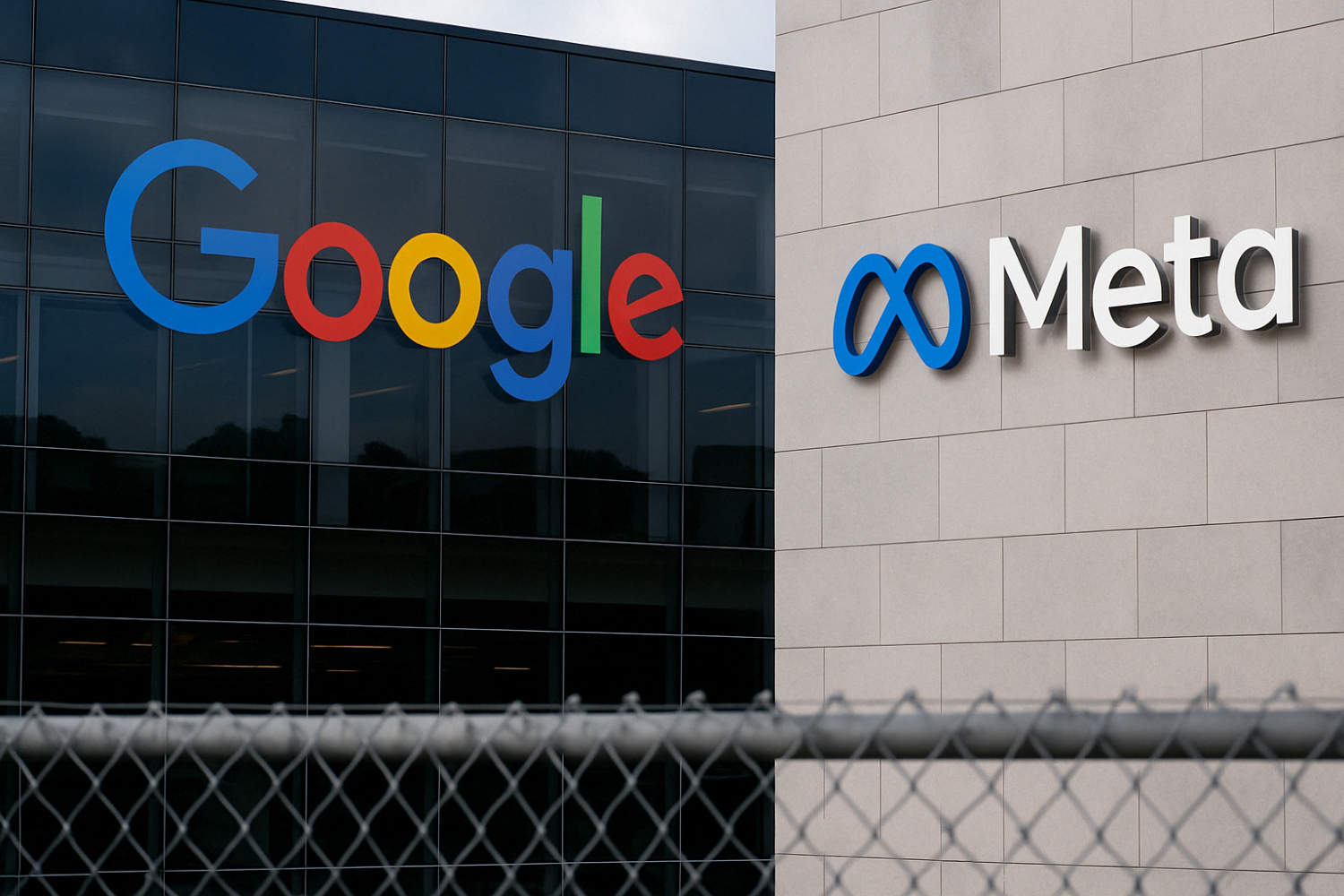
Giants of the digital realm rarely surrender their dominance willingly. When authorities challenge their empires, complex questions emerge that defy simple solutions.
The quest to dismantle the Google and Meta breakup has unleashed unprecedented waves of big tech scrutiny across markets and jurisdictions. Policymakers worldwide grapple with creating tech industry regulation frameworks sophisticated enough to address modern monopolies. Meanwhile, high-stakes antitrust lawsuits proceed through courts at glacial pace, with mounting legal challenges forcing even seasoned jurists to question whether these battles will ultimately reshape the digital landscape or merely dent its surface.
The tangled web of digital monopolies
Recent years have witnessed the rapid ascent of tech conglomerates that shape not only how people access information but also how businesses compete. When analyzing the landscape, we see a handful of players exercise a high degree of market domination across vast ecosystems. Unlike traditional monopolies, these internet giants integrate advertising, content distribution, and user data collection, complicating efforts to identify clear boundaries. For example, Google’s reach extends from search to cloud services, making its role far more pervasive than historical monopolies in railroads or oil.
Many analysts note that competitive dynamics in the tech sector manifest in subtler forms, such as self-preferencing search results or acquiring emerging rivals. The challenge arises because services provided appear free to users, masking the true costs associated with diminished competition or restricted choices. This complexity becomes more pronounced when considering antitrust interventions—how can authorities untangle deeply integrated structures without disrupting critical digital infrastructure? While past cases offer reference points, the digital monopolies and their monopoly behavior introduce challenges never before encountered in regulatory history.
Identifying clear evidence of consumer harm
Proving harm remains the cornerstone of any antitrust action. Regulators must demonstrate that harm transcends theoretical risks and manifests as actual negative outcomes. While critics highlight explicit user data exploitation, such as unauthorized data sharing or opaque consent practices, opponents of intervention argue that users still benefit from free or low-cost digital services. The challenge lies in quantifying less visible harms, like restricted innovation or subtle unfair competition tactics that prevent new entrants from gaining traction. For instance, Google’s control over advertising auctions raises questions about transparency and fair access.
Recent legal investigations have revealed how market power can lead to price inflation for advertisers, which may ultimately be passed on to consumers.
Addressing these issues demands rigorous examination of how platforms leverage their dominance. Watchdog groups point to cases where price inflation becomes evident not in direct fees paid by users, but in higher prices across markets affected by these giants’ practices. Whether through targeted advertising costs or reduced data protections, evidence must withstand intense legal and public scrutiny. The burden of proof regarding consumer privacy concerns remains high—without substantial documentation of harm, efforts to break up these companies risk dismissal as overreach rather than necessary intervention for public welfare.
Complexities in defining market boundaries
Drawing clear lines around tech giants like Google and Meta creates a substantial challenge for regulators worldwide. Their constant expansion and overlapping services blur distinctions between what should constitute market definition sectors. Google’s dominance across search, advertising, and cloud computing, alongside Meta’s control over various social media platforms, makes it nearly impossible to determine precise competitive boundaries. Regulators attempting to analyze these territories face moving targets that continuously reshape themselves through acquisitions and innovations.
Legal proceedings against these companies require precise understanding of the digital market scope where alleged monopolistic behaviors occur. The ability to leverage user data across multiple services creates unique advertising ecosystems that traditional antitrust frameworks struggle to address properly. Courts must grapple with complex questions about market power and competition. Key considerations in these cases include:
- Separating distinct product markets despite technological convergence
- Measuring consumer substitution patterns across platforms
- Quantifying data advantages in competitive analysis
- Evaluating potential entry barriers for newcomers
These factors highlight why antitrust action faces significant definitional hurdles.
The unprecedented nature of tech platform integrations
Modern technology platforms present regulatory challenges unlike anything seen in previous antitrust cases. While traditional companies maintained separate product divisions, today’s tech giants create service integration complexity by weaving together messaging, shopping, content delivery, and data storage into unified experiences. This structural approach magnifies network effects where each additional user or feature exponentially increases value across the entire ecosystem rather than linearly.
Breaking apart such entities requires navigating technological interdependency at levels never before encountered in corporate separations. The deep interconnectedness challenge means features consumers value may function properly only within integrated business models that share infrastructure, code, and data flows. Separating Instagram from Facebook’s backend systems, for instance, represents more than administrative division—it potentially requires rebuilding fundamental technical architecture. These realities raise profound questions about whether traditional breakup remedies might unintentionally harm the very consumer benefits antitrust laws aim to protect.
Potential implications for consumers and innovation
Breaking up major platforms raises questions about the future landscape of digital services. Analysis shows that while fragmentation could open doors for new players, it might alter the way these integrated systems function. After years of development, the resulting changes to digital product quality remain uncertain as seamless features may become disconnected. Many analysts predict mixed results with some users gaining access to specialized services while others find themselves navigating across disconnected platforms. The potential negative market outcomes include adaptation challenges as companies scramble to redefine their offerings in a restructured marketplace.
The long-term consumer benefits and risks present a complex picture that defies simple predictions. Unbundling services might drive competition in previously stagnant sectors, yet questions linger about whether fragmented entities can sustain research budgets. The technology innovation impact could swing either way – sparking creative solutions from nimble competitors or reducing the scale advantages that funded moonshot projects. Market watchers note that similar regulatory interventions have yielded surprising results, sometimes creating value where none was expected while undermining seemingly obvious advantages elsewhere.
A major split could reshape how consumers experience online services, but the real gains or losses for innovation and quality remain unpredictable.
Political pressures and lobbying influence
Antitrust actions against tech giants never unfold in a political vacuum. Lawmakers face persistent pressure from various stakeholders as they consider regulatory changes. Behind the scenes, companies deploy sophisticated corporate lobbying tactics ranging from strategic research funding to building relationships with key decision-makers. These efforts shape the regulatory conversation in subtle ways that the public rarely sees. The technical arguments about market definition often mask deeper battles for influence taking place in Washington offices and fundraising events.
The path of tech regulation winds through a landscape shaped by election cycles and shifting priorities. Bills addressing market power can stall unexpectedly when political influence in tech regulation redirects attention elsewhere. Public hearings generate headlines but meaningful reform requires sustained focus that can be difficult to maintain. The practical reality of antitrust enforcement politics means that even strong legal cases may falter when confronted with well-orchestrated resistance. History shows that the timing and implementation of breakup orders depend as much on political will as on courtroom arguments.
Learning from historical antitrust precedents
Looking back at the outcomes of landmark legal battles provides valuable insights for today’s tech regulation debates. The AT&T dissolution in the 1980s fundamentally transformed the telecommunications sector by creating space for new competitors in ways that met regulatory expectations. Yet digital platforms present distinct challenges, as their control mechanisms differ substantially from those of previous antitrust cases. The notable Microsoft breakup example ended not with division but with behavioral constraints imposed by courts. This result demonstrates judicial caution that continues to influence how antitrust enforcement unfolds for technology companies, particularly as markets evolve at unprecedented speeds.
Contemporary policymakers studying historical monopoly lessons recognize that dismantling Google or Meta would follow a different trajectory than past interventions. Today’s technology ecosystem features greater interconnection and global reach, making simple comparisons inadequate. While Microsoft’s case centered on software bundling practices, current investigations focus on data dominance and advertising market control across digital spaces. These fundamental differences require regulators to develop fresh approaches rather than simply duplicating earlier strategies. Consequently, addressing modern digital monopolies demands creative legal frameworks that build upon but extend beyond the established precedents of business regulation history.